


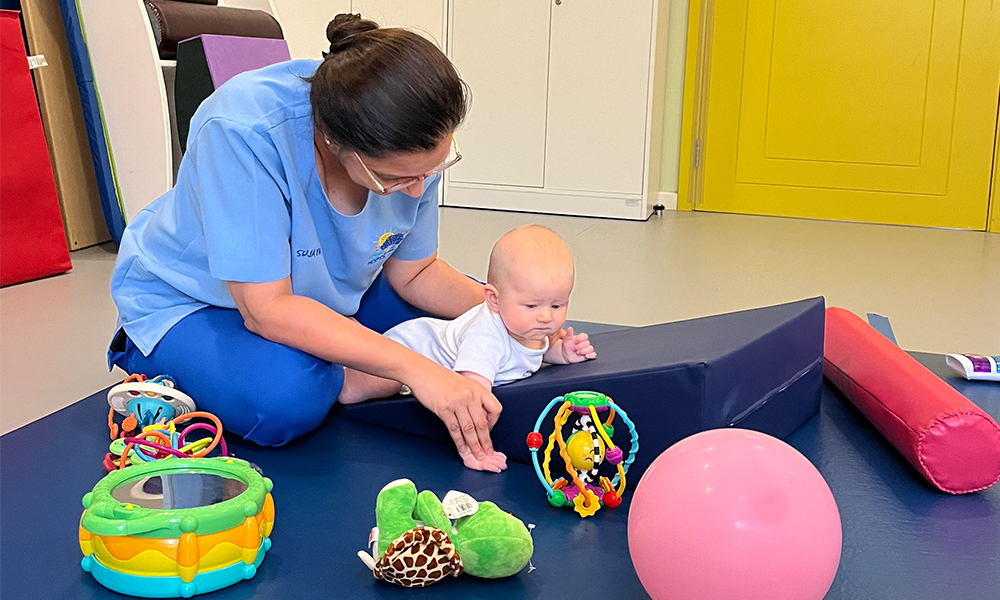

Every premature baby’s journey begins with hope – and a heartbeat that defies the odds.
Born too soon, yet filled with extraordinary strength, these little fighters remind us that life’s greatest miracles often come in the smallest forms.
This World Prematurity Day, on 17th November, we honour their journeys, the families who stand beside them, and the compassionate care that helps them grow from fragile beginnings to confident, thriving milestones.
At High Hopes Pediatric Therapy Centre, every small step forward is a milestone of hope – from day one.
Understanding Prematurity
Every year, about 15 million babies are born prematurely – that’s more than one in ten births worldwide, according to the World Health Organization. Advances in neonatal care have helped many of these babies survive and thrive, but prematurity still comes with unique challenges.
A baby born before 37 weeks of gestation often needs specialised medical and developmental support. Alongside early medical concerns such as breathing or feeding difficulties, there are also vital aspects of sensory and motor development that benefit from careful, therapeutic attention during the first months of life.
Common Areas of Concern
When a baby is born early, their development continues outside the safe, protected environment of the womb. Their senses, muscles, and nervous system are still learning to organise and respond to the world around them.
Some common areas where preterm babies may need extra support include:
- Movement and posture: Low or high muscle tone can affect early motor skills and alignment.
- Feeding and oral control: Coordinating sucking, swallowing, and breathing can be challenging for immature muscles.
- Sensory regulation: Some babies are easily overwhelmed by light, sound, or touch.
- Vision and hearing: Immaturity in these systems can influence bonding and early communication.
- Social and cognitive development: Subtle delays in attention, interaction, or play may appear as the child grows.
Awareness of these areas helps caregivers and therapists provide early, individualised support, ensuring the baby’s brain and body develop in harmony.
Therapeutic Support in the NICU
In the Neonatal Intensive Care Unit (NICU), every experience matters. The goal of therapy in this setting is not only to help the baby grow stronger but also to protect and organise the developing nervous system.
Therapists play an important role in supporting stability, comfort, and family connection through:
- Gentle, neuroprotective handling that helps babies feel contained and calm.
- Positioning and nesting that support natural flexion and midline posture.
- Sensory control by reducing harsh lights and noise to mimic the quiet safety of the womb.
- Parental guidance, empowering families to understand and respond to their baby’s cues with confidence.
These simple, intentional actions help build the foundation for later movement, feeding, and interaction – shaping how the baby experiences their world.
A Story of Hope: Baby Lulia
Among the many inspiring journeys we’ve witnessed, Baby Lulia’s story truly reflects the essence of resilience.
Born at 24 weeks, she entered the world far too soon — tiny, fragile, and fighting for every breath. From the earliest days in the NICU, her parents worked closely with the therapy team, learning how to comfort, position, and support her development, even through the incubator walls.
After discharge, Lulia continued with early intervention therapy, guided through regular home programmes and close therapist-family collaboration. Each milestone — a steady head lift, a first crawl, a confident step — came with patience, repetition, and love.
Today, at 18 months, Lulia is walking, talking, and exploring the world with curiosity and joy. Her journey reminds us that with timely therapy, family commitment, and compassionate care, preterm babies can flourish beyond all expectations.
Beyond the NICU: Early Intervention and Family Support
The journey doesn’t end at discharge. For families, bringing their baby home often comes with mixed emotions.
Early intervention bridges this transition, helping babies continue to develop motor control, sensory awareness, and engagement in daily life. Therapy during infancy focuses on:
- Encouraging movement and strength through play and guided exploration.
- Supporting feeding and oral-motor development for safe, enjoyable mealtimes.
- Promoting balance, coordination, and posture as babies grow and become more active.
- Coaching parents so they feel confident integrating therapy principles into everyday routines.
Consistency and family involvement make a profound difference, allowing each baby to learn, adapt, and flourish at their own pace.
Long-Term Outcomes and Hope for the Future
With early and individualised support, most preterm babies go on to reach their milestones and lead fulfilling, active lives. Early therapy helps minimise long-term risks related to motor coordination, sensory sensitivities, and learning differences – ensuring each child can participate fully in play, school, and family life.
From a baby’s first steady gaze to their first steps, the progress we see reminds us that resilience begins early. Every small gain is a celebration – every new movement is a promise of what’s ahead.
Together for Preterm Babies
This World Prematurity Day, we celebrate the remarkable courage of premature babies and the strength of the families and caregivers who walk beside them.
Their stories teach us that progress isn’t measured by size or speed. It’s found in the quiet, determined steps that move each child forward. With compassionate care, early intervention, and family love, these small beginnings grow into extraordinary lives.
References:
- Chawanpaiboon, S. et al. (2023). National, regional, and global estimates of preterm birth in 2020: a systematic analysis. The Lancet, 2023. https://pubmed.ncbi.nlm.nih.gov/37805217/ Summary: This large-scale analysis estimated that 13.4 million babies were born preterm in 2020 — around 9.9% of all live births globally. The study highlights persistent disparities in preterm birth rates between regions, emphasizing the global need for neonatal and developmental care strategies.
- Craig, J.W. & Smith, C.R. (2020). Risk‑adjusted/Neuroprotective Care Services in the NICU: The Elemental Role of the Neonatal Therapist (OT, PT, SLP). Journal of Perinatology, 40(4), 549–559. https://pubmed.ncbi.nlm.nih.gov/31992820/ Summary: This article outlines the multidisciplinary role of neonatal therapists in neuroprotective and developmental care. It emphasizes how PT, OT, and SLP collaboration promotes sensory organization, family bonding, and long-term developmental outcomes for preterm infants.
- Khurana, S., Kane, A.E., Brown, S.E., Tarver, T. & Dusing, S.C. (2020). Effect of Neonatal Therapy on the Motor, Cognitive, and Behavioural Development of Infants Born Preterm: A Systematic Review. Developmental Medicine & Child Neurology, 62(6), 684–692. https://pmc.ncbi.nlm.nih.gov/articles/PMC7920849/ Summary: A systematic review of neonatal therapy interventions demonstrating positive effects on motor and cognitive outcomes among preterm infants. It supports early therapy involvement in the NICU as a foundation for optimal neurodevelopment.
- Goldstein, R.F. & Malcolm, W. (2019). Care of the Neonatal Intensive Care Unit Graduate After Discharge. Pediatric Clinics of North America, 66(3), 489–508. https://www.nccwebsite.org/content/documents/courses/Practical%20Aspects%20of%20Long%20Term%20NICU%20Grad%20Follow-Up_1.pdf Summary: A comprehensive overview of medical and developmental follow-up for NICU graduates, addressing growth, neurodevelopment, feeding, and transition to early intervention services after discharge.
- Knopf, A., et al. (2023). Primary Care Framework to Monitor Preterm Infants for Early Childhood Developmental Risks. Pediatrics, 152(1): e2023062511. https://publications.aap.org/pediatrics/article/152/1/e2023062511/192156/Primary-Care-Framework-to-Monitor-Preterm-Infants Summary: An American Academy of Pediatrics (AAP) clinical framework that guides pediatricians and early intervention teams in monitoring developmental risks in preterm infants, ensuring continuity between NICU discharge and early childhood care.