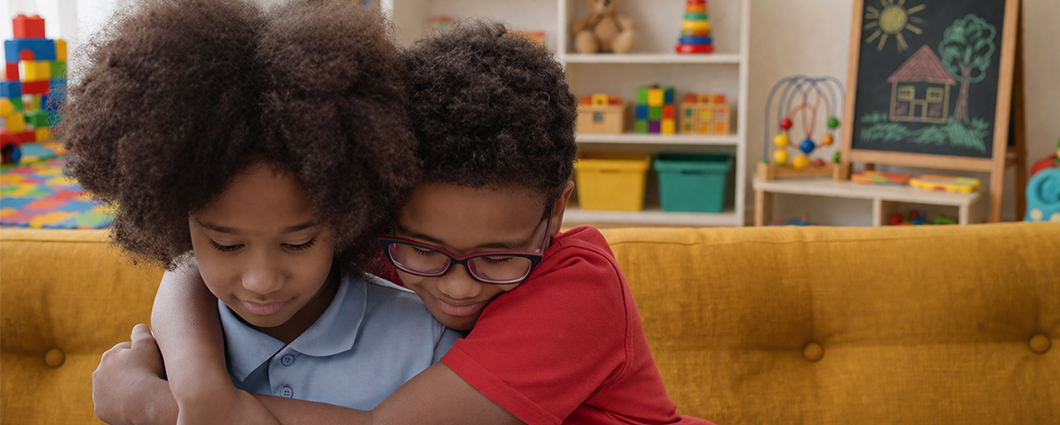

When a child has additional needs, families often find themselves navigating therapy appointments, school meetings, and medical visits while learning how best to support their child. While much of the focus understandably centres on this care, there is another group who may also be impacted: the siblings.
Growing up with a sibling who has additional needs can shape a child in meaningful ways and can play a unique role in the family dynamic. Siblings may act as protectors, translators, cheerleaders, or peacemakers. On the other hand, they may also experience confusion, frustration, guilt, and times where they need their own reassurance and support.
At High Hopes, we believe in the importance of a holistic, well-rounded approach to caring for children with additional needs. In honour of Sibling Day on 10 April, this blog will explore what research says about the experiences of neurotypical siblings and practical strategies essential for supporting them and nurturing familial bonds.
Understanding the Sibling Experience
Neurotypical siblings often notice differences early on, whether it’s therapy sessions, extra routines, or day-to-day moments when a brother or sister needs more support. Without guidance, children may fill in the gaps with their own interpretations, which can lead to:
- Feeling Overlooked
In families where one child requires significant support, there is often less opportunity for one-on-one time with siblings. During particularly stressful periods, this can leave siblings feeling that their own needs are secondary. Additionally, because emotional outbursts and communication challenges can be more frequent in neurodivergent children, parental attention may naturally be directed towards the child needing the most immediate support. - Conflicting Emotional Experiences
Siblings may experience a complex mix of emotions, including deep love alongside moments of frustration or resentment, followed by possible feelings of guilt for having those emotions. At times, children may struggle to understand the reasons behind their brother’s or sister’s behaviour. Some may also place pressure on themselves to be the “easy” or “perfect” child in response to the increased attention their sibling receives. - Early Roles of Responsibility
Older siblings are sometimes involved in caregiving roles. While this can foster empathy and maturity when balanced appropriately, it may also become stressful if the child begins to feel overly responsible for their sibling’s needs or wellbeing. - Impact on Family Times and Activities
Having a family member with additional needs can influence the family’s ability to participate in recreational activities together. Outings and shared leisure time may require extra planning or may happen less often, which can make relaxed family time feel limited or, at times, like a rare opportunity for siblings.
Strategies for Parents: How You Can Support
- Talk About Differences – Honestly and Often
Maintain open and honest conversations about their sibling’s needs by answering questions, explaining behaviours, and keeping the topic normalised within the family. This helps siblings make sense of what they observe and supports them in advocating for their sibling when needed.
Using books, social stories, or sibling support groups can further strengthen understanding. When siblings are well informed, they are more likely to respond with empathy rather than confusion or frustration. - Validate Feelings and Emotions
Siblings may experience a wide range of emotions, including frustration, jealousy, sadness, or even embarrassment. It is important to acknowledge these feelings without judgment and to reassure children that having mixed or complicated emotions is normal. - Modelling Emotional Regulation and Empathy
Children learn how to respond to big emotions and challenging situations by watching the adults around them. When parents remain calm and offer co-regulation during difficult moments, they set the emotional tone for the whole household.
Empathy also develops through explanation. By consistently modelling empathy towards all children in the family, parents help siblings feel equally seen and valued while also showing them what empathy looks like in action. - Create Individual Time
Protecting regular one-on-one time with parents helps reinforce the sibling’s sense of importance within the family. Scheduling consistent “special time” around activities they enjoy can strengthen self-esteem and emotional security. - Make Them Feel Involved
When appropriate, look for opportunities to involve siblings in fun and meaningful ways. They might help set up a sensory activity, read a story, or join part of a therapy session. This can strengthen connections and help neurotypical siblings feel included rather than left out.
At High Hopes, siblings are warmly welcomed and often encouraged to join! Where appropriate, they may observe sessions or be thoughtfully incorporated into activities to promote meaningful interaction and positive, playful shared experiences.
For example, siblings might participate in shared play during ABA sessions, join turn-taking or communication games in speech therapy, support movement activities in physiotherapy, or engage in guided sensory play in occupational therapy. These moments are always structured by the therapist to ensure they remain positive, purposeful, and beneficial for everyone involved. - Address Future Concerns Openly
Siblings often have questions and worries about the future, and many want opportunities to talk about these thoughts with their parents. Even younger children may quietly wonder what lies ahead or whether they will one day take on a caregiving or supportive role. Creating space for honest, age-appropriate conversations can help.
Research suggests that proactive future planning benefits the whole family, including parents, neurotypical siblings, and children with additional needs. Open dialogue and thoughtful planning can provide reassurance, reduce uncertainty, and help ease siblings’ anxiety about what the future may hold.
Overall, we recognise the delicate balance families navigate when supporting a child with additional needs while also caring for the wellbeing of the whole family.
At High Hopes, our support extends beyond therapy sessions. Through guidance, understanding, and close collaboration with parents, we help families navigate the complexities of raising children with diverse needs while nurturing strong, healthy family relationships.
If you would like support with sibling dynamics, family routines, or creating a more connected home environment, our team is always here to support you and your family every step of the way, please contact us.
References:
- Glasberg, B. A. (2000). Siblings of children with autism: A guide for families. Woodbine House.
- Indiana Resource Center for Autism. (n.d.). Siblings’ perspectives: Some guidelines for parents. https://iidc.indiana.edu/irca/articles/siblings-perspectives-some-guidelines-for-parents.html
- Petalas, M. A., Hastings, R. P., Nash, S., Reilly, D., & Dowey, A. (2012). “I like that he always shows who he is”: The perceptions and experiences of siblings with a brother with autism spectrum disorder. International Journal of Disability, Development and Education, 59(4), 303–318. https://doi.org/10.1080/1034912X.2012.723944
- Steps Behavioral Health. (n.d.). Supporting the siblings of autistic kids. https://www.stepsbh.com/supporting-the-siblings-of-autistic-kids/
- Tsao, L. L., Davenport, R., & Schmiege, C. (2012). Supporting siblings of children with autism spectrum disorders. Early Child Development and Care, 182(12), 1581–1598. https://doi.org/10.1080/03004430.2011.620624