
Looking back at the first time I knew something was off, the first rush of fear that came with the diagnosis, and the first set of feelings that accompanied the beginning of our journey – all negative, all disappointing, and discouraging. We were too afraid to be happy, to enjoy, and celebrate his mere existence.
The research began: the midnight scrolling and Google searches, down the rabbit hole we went. I cannot recall what exactly we were searching for – symptoms, side effects, weird, irrational questions suggested by Google, but now I know: we were searching for hope.
Early intervention – how early are we talking?
With the diagnosis falling into our laps, we were informed that therapies would be needed down the line. What we didn’t know was how early we could start. As I embarked on studying to become an Early Intervention Specialist, a sign from heaven came rushing upon me: early intervention can start from the first day a child is born, especially if they are admitted to the NICU.
There is no right or wrong age for early intervention; the sooner we start, the better the chances we are giving our baby to reach his potential. We started physiotherapy at four months, followed by feeding and occupational therapy at six months. A month went by; there was little progress, and we allowed our fears to steal away hope.
The trap of comparison
As we started to go out more – playdates, birthday parties, walks in the park or the mall – we couldn’t stop ourselves from looking at other children similar in age to our child, and burying ourselves in disappointment and sorrow.
Comparison was a trap. We sometimes overlooked the progress of sitting independently as we saw another baby starting to crawl. A first bite of soft banana went unnoticed when another child was chewing on a piece of chicken. Oh, the games our brain plays. As we focus on what’s missing, we eliminate all the positive progress, dismissing the small changes, until it hit me: I was afraid to live in hope.
An ecosystem – everywhere all the time
As I intentionally kept my focus on my child’s progress, I noticed how far we have come. Early intervention starts in the therapy room, but the real progress goes beyond those 45 minutes. We set up a daily routine of using all the exercises given to us by his therapists.
We included the entire family in this journey beyond the therapy room. My friends were bossed around (by me) to ensure they always communicated with him at eye level. I also briefed his nursery teacher on his daily exercises and routines. When I found the support ecosystem that I had created, only then did my own breakthrough happen, and only then did I start seeing my son’s big breakthroughs. I allowed myself to say hello to hope.
Our Big Breakthroughs are someone else’s Normal – and that’s OK
If I were told that my son would be taking his first independent steps before his second birthday when we first started our early intervention journey, I would not have believed it or, more precisely, I would have refused to believe it. At one point, someone else’s normal development was an impossible milestone for us.
As I started embracing and meeting him where he was developmentally, I was shocked at how far he had come. What was once a far-fetched milestone became a big breakthrough, and now it is the new normal. With the right support system, and by celebrating every step of progress as a big breakthrough, we are finally living in hope.
Ongoing celebrations
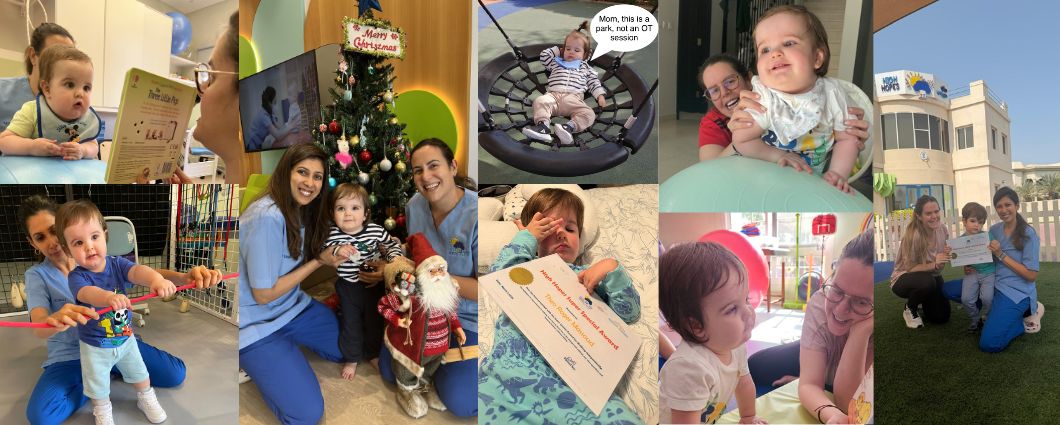
Théo is now running around the park, pointing at whatever catches his interest, babbling “Dubai” (his way of saying “I want to go bye-bye”), and it wouldn’t have been possible without the hope and dedication our precious therapists at High Hopes have provided, and the support and love of our family, and my best friend Noelle, who has been my backbone through this journey.
Oh, and a special thanks to myself for believing in my child and for accepting the new journey that I call hope.
So go ahead, mums, dads, and caregivers – celebrate yourselves and your children. Celebrate every eye contact, every gesture, and every movement, and always remember: there is hope.