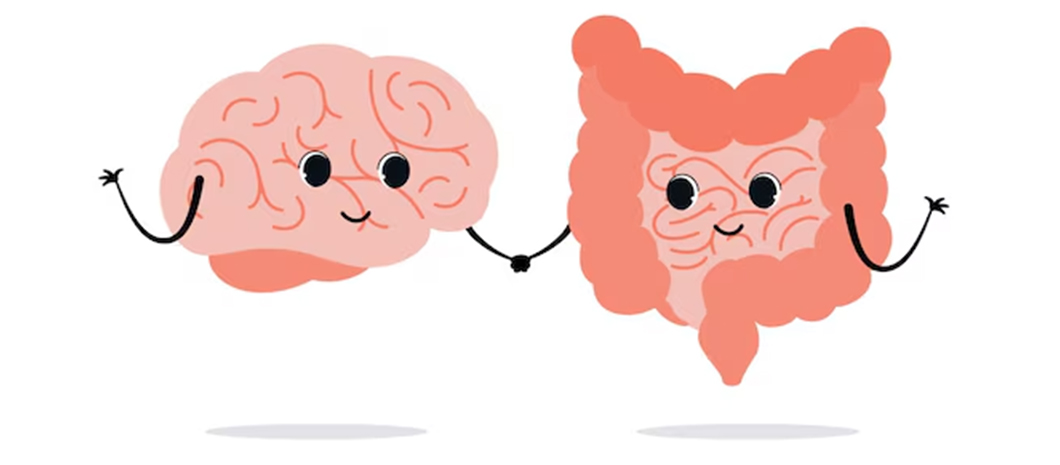

All behaviour is a form of communication. When a child struggles with emotions, attention, movement, or learning, their behaviour is often telling us something important about what is happening inside their body and brain. For a child to stay calm, focused, and regulated, they must first feel safe. If their internal environment, particularly the gut, is unsettled, that sense of safety can be difficult to find.
Gut discomfort, irregular digestion, or imbalances can quietly affect a child’s mood, energy, posture, and ability to engage with the world. At High Hopes, physical therapists look beyond how a child walks or moves. We consider how gut health and nervous system regulation support posture, coordination, emotional balance, and a child’s ability to meaningfully explore, learn, and connect.
The Science of the “Bottom-Up” Connection
In therapy, we often talk about top-down regulation, which includes thinking, reasoning, and learning, and bottom-up regulation, which includes sensory input, movement, and internal body signals. Research now shows that the gut is one of the most powerful bottom-up regulators in the body.
The gut and brain are physically and chemically connected through the vagus nerve, a major communication pathway that works like a two-way superhighway. It constantly sends messages from the digestive system to the brain and back again, helping the nervous system decide whether the body feels safe or on high alert.
You may have heard the phrase trust your gut or noticed butterflies in the tummy when your child is excited, anxious, or overwhelmed. This is not just a figure of speech. It is the gut and brain communicating in real time.
How the Gut Supports Brain Development
The gut does far more than digest food. It plays a critical role in how a child’s brain develops, organises, and regulates. Inside every child’s digestive system lives a complex community of microorganisms known as the gut microbiome. These microbes actively influence brain development, nervous system regulation, immune health, and emotional balance.
One of the most powerful ways the gut influences the brain is through chemical signalling. Around ninety per cent of the body’s serotonin is produced in the gut. Serotonin is a key chemical involved in mood, sleep, learning, and emotional regulation. The gut also affects other important brain chemicals such as dopamine for attention and motivation, GABA for calming and relaxation, melatonin for sleep, and cortisol for stress.
When the gut is healthy and settled, it sends calm, organised messages to the brain through the nervous system. This supports the development of strong neural connections needed for self-regulation, movement control, focus, and emotional balance.
Early childhood is a particularly sensitive period for this system. The gut microbiome is shaped by birth mode, antibiotic use, diet, illness, and early life stress. When this balance is disrupted, a state known as dysbiosis, the gut may send ongoing stress signals to the brain. These signals can affect sleep, attention, energy levels, learning, and emotional regulation, often without obvious digestive complaints.
Why This Matters for Neurodiverse Children
Children with neurodevelopmental differences, genetic conditions, sensory processing challenges, or neurological diagnoses are more likely to experience gut issues such as constipation, reflux, feeding difficulties, or food sensitivities. These ongoing internal stressors can keep the nervous system in a heightened alert state, making regulation more difficult.
This heightened state can influence posture and core engagement, muscle tone that appears floppy or overly tense, coordination and balance, emotional regulation and behaviour, as well as sleep and endurance.
Understanding this connection helps us shift our perspective. Instead of asking why a child will not calm down or cooperate, we begin to ask what their body is trying to tell us. When we support gut health alongside movement, breathing, and sensory input, we help the nervous system feel safer from the inside out. This creates the foundation the brain needs to grow, regulate, and engage.
Signs Gut Health May Be Affecting Your Child
A child who appears clumsy, struggles to follow motor instructions, or seems constantly distracted may be coping with internal discomfort or a noisy nervous system linked to gut imbalance.
Emotional and behavioural signs may include frequent meltdowns, low frustration tolerance, overreacting or under-reacting to touch, sound, light, or movement, constant movement or pressure-seeking to feel regulated, difficulty falling asleep or staying asleep, increased anxiety or irritability, and difficulty concentrating or following instructions.
Physical and movement signs may include poor posture or slouching, leaning on furniture or adults for support, low endurance for sitting, standing, or walking, weak core strength, floppy or tense muscles, difficulty with coordination or balance, digestive issues such as constipation or reflux, and frequent fatigue during play or school activities.
Common Diagnoses and Their Gut Connections
Research increasingly shows that many childhood diagnoses are closely linked with gut health. Children with Autism Spectrum Disorder are significantly more likely to experience gastrointestinal symptoms. For non-verbal children, behaviours such as aggression or self-injury may be a way of communicating discomfort.
In ADHD, emerging research suggests that reduced beneficial gut bacteria may affect dopamine and serotonin pathways, contributing to difficulties with attention and impulse control. For children with Cerebral Palsy, gut challenges are often mechanical, with a high prevalence of chronic constipation related to reduced mobility and altered muscle tone.
Down Syndrome has been associated with increased gut inflammation, which may contribute to anxiety and nervous system stress rather than true behavioural stubbornness. In children with sensory processing challenges, gut inflammation can heighten nervous system sensitivity, making everyday sensations feel overwhelming.
Gut issues may not be the root cause of these conditions, but they can make them harder to manage. Supporting digestion and gut health can reduce internal stress and improve a child’s capacity for regulation, movement, and engagement.
Supporting Your Child’s Gut–Brain Health: A Holistic Approach
The good news is that small, consistent supports can make a meaningful difference. By paying attention to gut health, movement, posture, and sensory regulation, you are helping your child feel safer, calmer, and more organised.
Key takeaways for parents include:
- Behaviour is a body message, not bad behaviour
- A calm gut supports a calm, organised body
- Movement regulates before it strengthens
- Posture improves when the body feels safe
- Small changes create big shifts over time
At High Hopes, collaboration is key. Physical therapists, occupational therapists, speech and language therapists, dietitians, and paediatricians can work together to support your child holistically. By understanding the gut-brain connection and supporting regulation from the inside out, you are giving your child the foundation to move, learn, play, and engage with confidence and comfort. Your child’s second brain is listening, and with the right support, it can thrive.
References:
- Al-Beltagi, M., Saeed, N. K., Bediwy, A. S., Elbeltagi, R., & Alhawamdeh, R. et Al (2023). Role of gastrointestinal health in managing children with autism spectrum disorder. World Journal of Clinical Pediatrics
- Marano , Sfratta , Marzo, Cozzo , Abate , Traversi , Mazza , Capristo , Gaetani , Mazza et Al (2025) The Pediatric Microbiota-Gut-Brain Axis: Implications for Neuropsychiatric Development and Intervention