At High Hopes, we acknowledge that there are many factors that contribute to a successful therapy journey. We believe that the connection between your child and their therapist is one of the most important factors for effective intervention, along with matching your child’s needs with a therapist’s specific expertise. While therapists play the central role, positive outcomes for children and families are made possible by the combined efforts of many people and processes throughout the organisation. Therapists can focus on providing the highest quality therapy when they are supported by strong organisational foundations, efficient systems, and a dedicated operations team working behind the scenes.
That’s where ISO comes in! ISO (International Organization for Standardization) is a globally recognised body that develops standards to help organisations deliver consistent, high-quality, safe, and efficient services. In this blog, we discuss how ISO certification positively impacts your child’s therapy journey.
A Commitment to Quality Services
At High Hopes, we know that having clearly defined clinical and operational systems that reflect the therapy process optimises our service provision. What many of us intuitively recognise from our everyday experience is now being increasingly supported by research evidence.
In a recent study examining the key success factors influencing service quality in a paediatric early intervention and rehabilitation centre, reliability and responsiveness emerged as the most important determinants of a high-quality service. This highlights the importance of robust policies and procedures that are consistently followed to improve outcomes for families.
Family Feedback
Research consistently highlights the importance of a family-centred approach in paediatric therapy. Our therapists know that increasing parents’ involvement can lead to better outcomes for the child. In line with this, and as part of our quality management system, we actively seek and value feedback from parents and caregivers. We have established processes for collecting, reviewing, and responding to feedback, ensuring that the voices of our families contribute to the ongoing development of our services.
Performance Management and Continuing Professional Development
For all parts of an organisation to work in harmony, team members must have clearly defined roles, responsibilities, and accountability. At High Hopes, our performance management system evaluates a range of areas that contribute to high-quality service delivery, including Continuing Professional Development (CPD) for our therapists.
As part of this process, therapists work collaboratively with their supervisors to reflect on their strengths, identify areas for growth, and recognise any gaps in their knowledge or skills. Together, they develop a CPD plan to address these needs and support ongoing learning. We also ensure that all training opportunities are relevant to the needs of the children and families we serve, enabling our therapists to provide evidence-based and effective care.
A recent systematic review examining the impact of CPD on patient outcomes found that CPD programmes enhance patient care, particularly those that incorporate practical skill development, protocol-based implementation, organisational support, and ongoing reinforcement. This highlights CPD as a key component of quality management and continuous improvement within our therapy services.
Your Child’s Safety
As part of our ISO certification, we have demonstrated our commitment to maintaining a safe and healthy environment for children, families, team members, and visitors. We have rigorous systems in place to identify risks, prevent incidents, and continuously improve health and safety practices.
Our therapists understand the importance of implementing these protocols, especially for the “Super Special Ones” who visit our centre, many of whom have complex medical needs or vulnerable immune systems. This is consistent with guidance from the American Academy of Pediatrics, which states that paediatric healthcare providers should actively promote a culture of safety and implement practices that reduce avoidable harm, recognising patient safety as a core component of quality healthcare.
Leading the Way in the UAE!
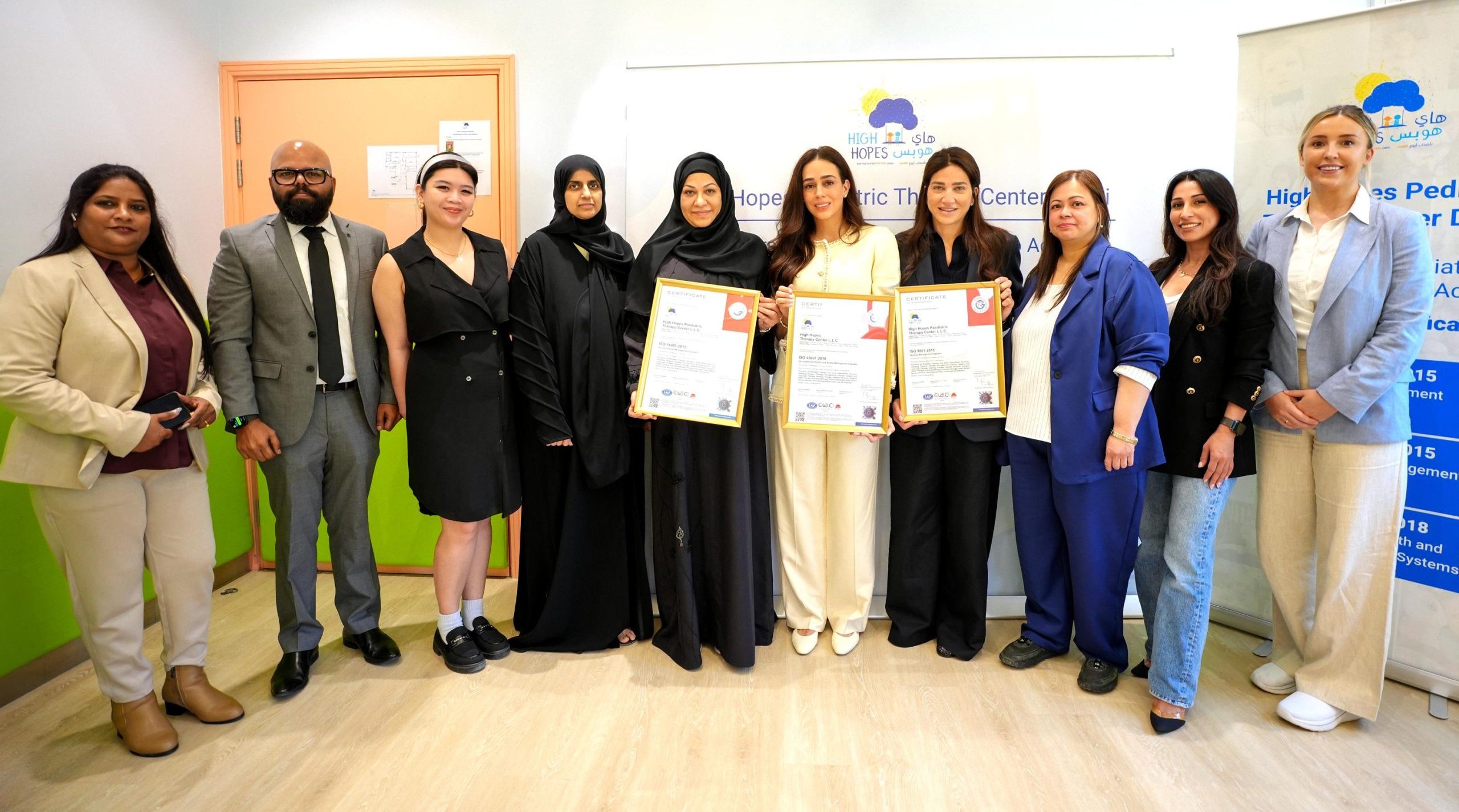
We are excited and proud to be the first paediatric therapy centre in the United Arab Emirates to achieve triple ISO certification. By choosing an ISO-certified paediatric therapy centre, families can be confident that the organisation undergoes regular independent audits to ensure it consistently meets internationally recognised standards for quality, safety, and service delivery.
ISO certification not only provides a framework for excellence but also encourages us to hold ourselves accountable and continually strive for even higher standards in everything we do!
For more information about ISO standards and certification, visit the International Organization for Standardization (ISO) at www.iso.org and High Hopes Media Page.
References:
- Ali, S. et al. (2025). Impact of Continuing Professional Development (CPD) on Patient Outcomes: A Systematic Scoping Review
- Gagné-Trudel S, et al. (2024). Exploring Therapeutic Relationships in Pediatric Occupational Therapy: A Meta-Ethnography.
- International Organization for Standardization. (n.d.). Management system standards. ISO. https://www.iso.org/management-system-standards.html
- King, G., Williams, L., & Hahn Goldberg, S. (2017). Family-oriented services in pediatric rehabilitation: A scoping review and framework to promote parent and family wellness.
- Published in Child: Care, Health and Development.
- Lin, C.Y., Shih, F.C., Chou, M.T., & Ho, Y.H. (2021). Key Success Factors for Medical Service Quality of Early Treatment and Rehabilitation for Children in Taiwan. Sustainability, 13(24), 14038
- Mueller, B. U., Neuspiel, D. R., & Stucky Fisher, E. R., on behalf of the Council on Quality Improvement and Patient Safety and Committee on Hospital Care. (2019). Principles of pediatric patient safety: Reducing harm due to medical care. Pediatrics, 143(2), e20183649. https://doi.org/10.1542/peds.2018-3649