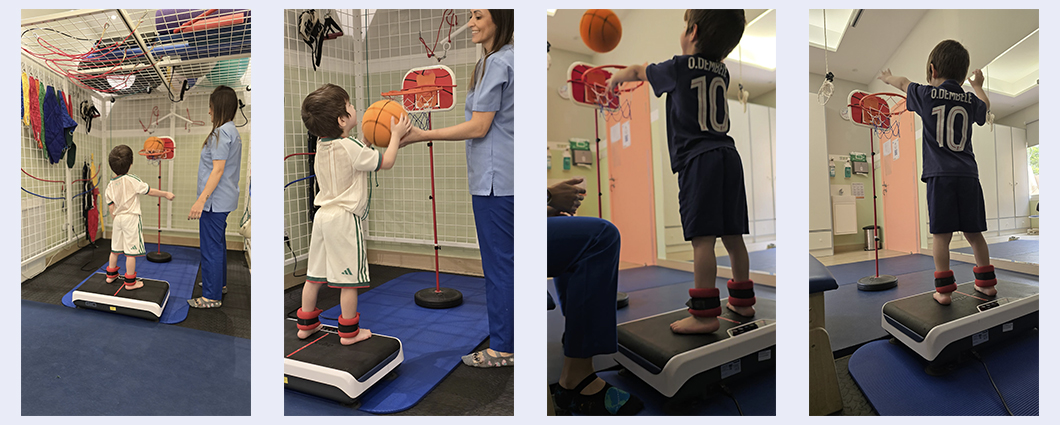

It is not uncommon for parents to say that their child is “clumsy”. Certain children appear to fall more frequently than other children, take longer to learn how to run or jump, and have difficulty with activities that involve balance and coordination. In many cases, these differences are just part of the normal variation in childhood development. Nevertheless, if these difficulties persist, get worse over time, or start to affect the child’s ability to take part in everyday activities, they deserve closer attention.
The aim of Ataxia Awareness Day is to raise awareness of ataxia, a neurological disorder which remains little known to many families and is usually diagnosed later than it should be. However, when families recognise the early signs, they can seek timely medical assessment, conduct appropriate investigations, and initiate early interventions, helping children achieve their full functional potential and enhancing their quality of life (Hartley et al., 2019) & (National Ataxia Foundation [NAF], n.d.).
What is Ataxia?
Ataxia is a neurological symptom which involves a lack of coordination of voluntary movements and is generally due to a malfunction of the cerebellum, which is situated in the back part of the brain, or of the neural pathways involved in motor control (3).
Children with ataxia may have difficulty maintaining their balance, walking, running, reaching for objects accurately, speaking clearly, or controlling eye movements. For example, a child with ataxia might frequently stumble while crossing a playground or have trouble picking up a cup without knocking it over, even though their strength is otherwise normal. A helpful analogy is to imagine an orchestra without a conductor: every instrument is present, but without proper coordination, the music cannot flow smoothly.
What signs should raise concern?
The following signs may indicate the need for a specialist medical assessment:
- Frequent falls beyond what would be expected for the child’s age.
- An unsteady or wide-based walking pattern.
- Difficulty running, changing direction, or climbing stairs.
- Tremor when reaching for toys or objects (intention tremor).
- Difficulty learning new motor skills.
- Speech that is slow, slurred, or poorly articulated.
- Abnormal eye movements.
- The inability to carry out motor skills that had been previously learned.
It is important to remember that none of these signs confirms a diagnosis of ataxia on its own. Instead, they suggest that the child should be assessed by an experienced healthcare professional, ideally a paediatric neurologist (Klockgether, 2012).
Not every child with balance difficulties has ataxia
A major reason why ataxia is hard to diagnose is that a number of different disorders can lead to similar difficulties with balance and coordination. Simply observing the way a child walks or moves is not sufficient to identify the cause. It is necessary to carry out a comprehensive medical evaluation in order to find out why these problems are occurring.
Depending on the child’s age, medical history, and symptoms, the doctor may consider several possible causes, including:
- Cerebral palsy, particularly forms that mainly affect balance and coordination.
- Developmental Coordination Disorder (DCD), a condition in which children have difficulty learning and performing motor skills despite having normal muscle strength.
- Neuromuscular disorders, which affect the nerves or muscles involved in movement.
- Inner ear (vestibular) disorders, which can interfere with balance.
- Changes affecting the cerebellum, such as tumours or other brain lesions.
- Inherited (genetic) conditions, including the different types of hereditary ataxia.
- Metabolic or mitochondrial disorders, which affect how the body’s cells produce and use energy.
- Vitamin deficiencies, such as vitamin E deficiency, and other conditions that may be treatable if identified early.
- Inflammatory or infectious conditions that affect the brain or nervous system.
In certain children, balance problems can appear suddenly, such as following a viral illness, while in others the symptoms develop slowly over months or even years. Since there are numerous possible causes, it is important that children who have ongoing or worsening balance and coordination problems should be assessed by a paediatric neurologist. A thorough medical history, a neurological examination, and, if appropriate, additional investigations can assist in identifying the underlying cause and preparing the most suitable treatment and rehabilitation programme (Klockgether, 2012) & (Musselman et al., 2014).
How is the diagnosis made?
To identify the cause behind ataxia, it is usually necessary to combine a clinical evaluation with specific investigations.
Depending on the child’s presentation, the evaluation may include:
- A detailed developmental history.
- A comprehensive neurological examination.
- Blood tests.
- Brain MRI.
- Genetic testing.
- Metabolic investigations when clinically indicated.
Each child is different, and investigations must be based on clinical findings rather than following a one-size-fits-all approach.
What role does rehabilitation play?
Although treatment depends on the underlying cause, rehabilitation is essential in helping children maximise their functional abilities and participation.
Management often involves a multidisciplinary team including a paediatric neurologist, physical therapist, occupational therapist, speech and language therapist, orthopaedic specialist, psychologist, and other professionals according to each child’s individual needs.
Physiotherapy commonly focuses on:
- Improving balance and postural control.
- Developing movement strategies to reduce falls.
- Enhancing coordination.
- Building strength and endurance.
- Promoting independence in everyday activities.
- Encouraging participation in play, school, sports, and community life.
More high-quality research among children is still required, but the evidence currently available indicates that individually tailored exercise programmes and physiotherapy can improve balance, mobility, and general functional performance in children with ataxia (2).
On Ataxia Awareness Day, our greatest goal is to promote awareness and understanding. When a child has ongoing problems with balance and coordination, it is important to get an assessment from a paediatric neurologist and a multidisciplinary rehabilitation team, as this integrated approach can be more effective and make a big difference. The more quickly the underlying cause is found, the greater the chances of promoting independence, participation, and quality of life.
We at the High Hopes Dubai Paediatric Therapy Center believe that every child should have a comprehensive assessment, a personally tailored therapy programme, and a compassionate team which supports the whole family on their journey. Should you have any worries regarding your child’s motor development or if you would like to find out more about their problems with balance and coordination, our team would be happy to hear your concerns, answer your questions, and give you the guidance and support you need. In this way, we can together help your child achieve their full potential.
References
- Hartley, H., Cassidy, E., Bunn, L., Kumar, R., Pizer, B., & Lane, S. (2019). Exercise and physical therapy interventions for children with ataxia: A systematic review. The Cerebellum, 18(5), 951–968.
- Klockgether, T. (2012). Sporadic ataxia. Handbook of Clinical Neurology, 103, 253–262.
- Musselman, K. E., Stoyanov, C. T., Marasigan, R., Jenkins, M. E., Konczak, J., & Morton, S. M. (2014). Prevalence of ataxia in children: A systematic review. Neurology, 82(1), 80–89.
- National Ataxia Foundation. (n.d.). About ataxia. National Ataxia Foundation.